Hiking, biking, and camping around Chicago and throughout Illinois

New guidebooks coming this spring: Pre-orders available

December 17th, 2009
Tunnel Hill Trail in Southern Illinois

Tunnel Hill Trail in Southern Illinois

Anyone who’s passed within 100 feet of me during the past year knows that I have four new guidebooks that will be released this coming spring.

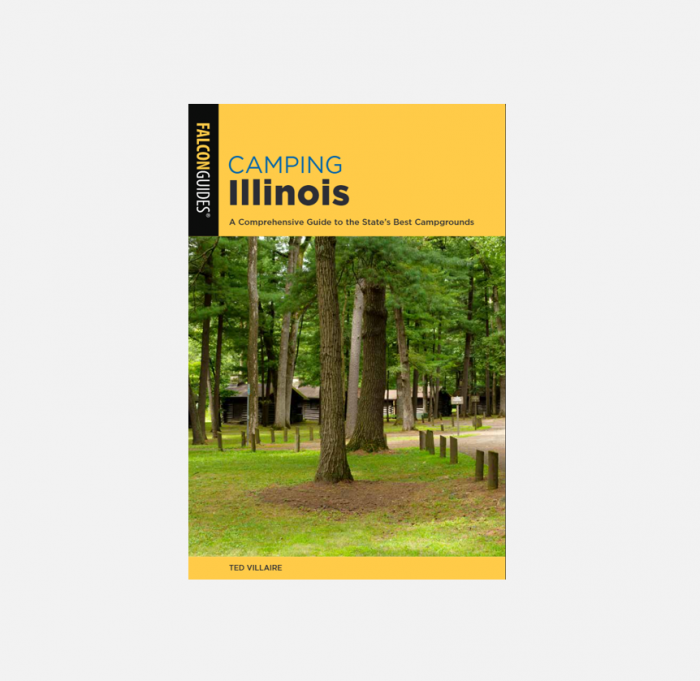
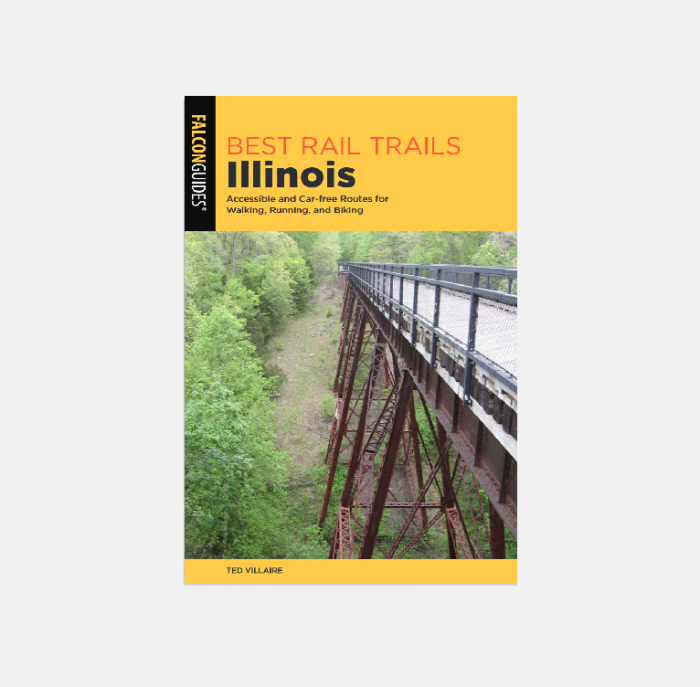
Three of the books—Best Illinois Rail Trails, Illinois Road Biking, and Camping Illinois—required many months of research and writing. While researching the books, I camped for several months and I drove for a few thousand miles. I explored Illinois from head to toe, visiting nearly every major park and most of the state’s historic attractions. I explored the rocky cliffs in the Shawnee National Forest and I cycled along the banks of the state’s big rivers. I traveled for many miles on old farm roads where the only sound was the twittering of sparrows.

All in all, it’s been the best job I’ve ever had. I love the process of exploring new places, gathering information, and then shaping the details into something that is eminently useful and fun to read. While this process gives me a special thrill, even more satisfying is the next step—getting the books into the hands of readers.

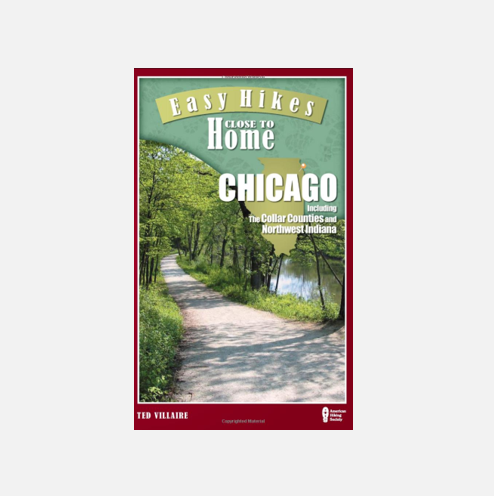
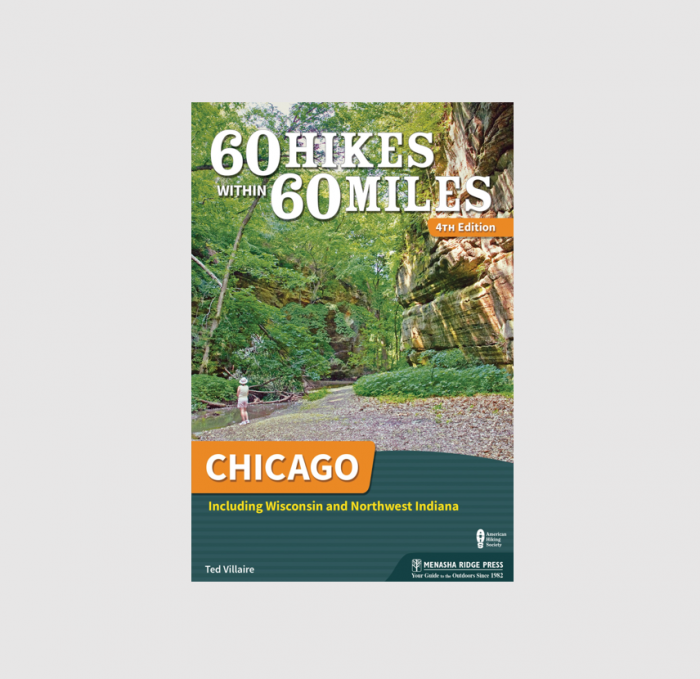
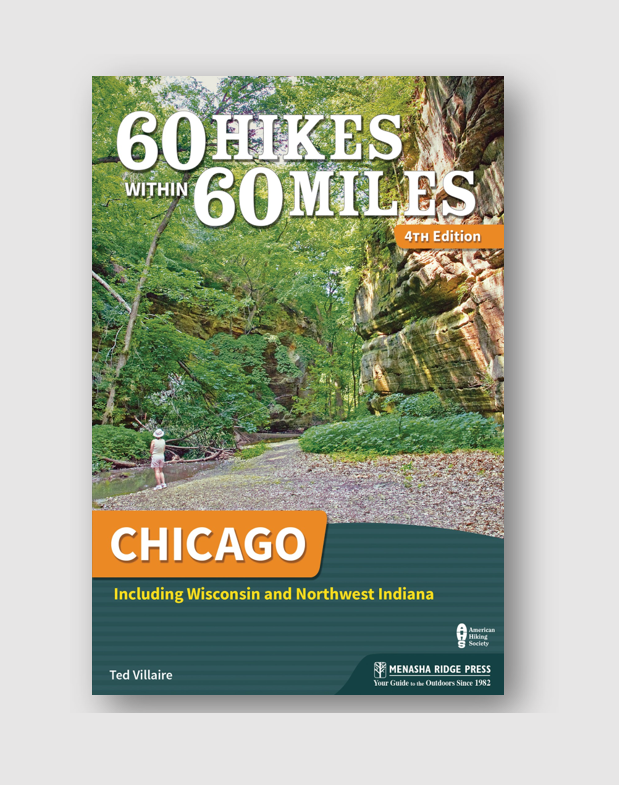
The other book to be released this spring is a new, shorter version of my book, 60 Hikes within 60 Miles: Chicago. It’s called Easy Hikes Close to Home: Chicago and it’s geared specifically toward newbie hikers who are interested in less strenuous local hikes. Like the other books, I’m eager to see this book put to good use. Enticing new people to explore local trails is an exciting prospect.

All four books are now available for pre-order on Amazon.com. Titles listed below link to a description of each book, its full table of contents, and a page for pre-ordering.

  • Share/Bookmark

Biking and paddling the Michigan coast

October 3rd, 2009

My friend Kari Lydersen recently interviewed me for a short piece for the Great Lakes Town Hall, a website where she served as a guest writer. She wanted to learn more about a trip I took in August bicycling the west coast of Michigan. As I explain below, for much of the trip, I was hauling my folding kayak with a bicycle trailer.

After reading the interview, be sure to check out Great Lakes Town Hall. It’s an excellent website with plenty of news and views on the Great Lakes.

My kayak awaits assembly on North Manitou Island.

My kayak awaits assembly on North Manitou Island.

Q: How exactly did you travel by kayak and bike down the coast of Lake Michigan?

The idea for the trip was to combine a couple of my favorite outdoor activities–cycling and kayaking–while exploring some of the west coast of Michigan’s lower peninsula. For much of the trip, I was hauling my sea kayak (it folds up into a suitcase-sized bag that weighs about 35 lbs) behind me in a bike trailer. I stayed as close to the shoreline as possible and camped most of the time at the numerous parks along the way.

I started the 10-day trip by paddling around North Manitou Island off the coast of Sleeping Bear Dunes. From there, I bicycled my way down to Muskegon, stopping frequently for paddling, lollygagging on beaches, bike rides and exploring parks and towns. When I reached Muskegon, I took the ferry to Milwaukee and then rode home to Chicago.

Sleeping Bear Dunes

Q: It was a windy and stormy few weeks; how did you deal with the weather? Were there times you wanted to be comfortable and dry at home?

Sure, there were a handful of times when I would have liked to be home on the couch. I’ve learned that having a fairly loose itinerary helps a lot. That way, you don’t feel compelled to push yourself to ride or paddle through conditions that may be uncomfortable, or perhaps dangerous. Since I was paddling by myself, I took a very cautious approach to paddling in the lake, and avoided it if lake waves were more than one foot.

During the trip, it rained three days or so and a couple nights. Fortunately, for a couple of those days, I was able to forgo campgrounds and stay in an affordable little motel right on the lake. I had stayed in the motel on my prior travels in the area. It’s located in a village called Arcadia, just 40 miles southwest of Traverse City. There are big beautiful dunes, excellent beaches, and a recently opened nature preserve with miles of hiking trails. And surprisingly, no tourism to speak of. That’s the beauty of this area–unbelievable natural beauty and, if you look for it, plenty of places where you can have a beach or a towering dune all to yourself.

One evening while in a state park campground during pouring rain, instead of setting up my tent in the rain, I decided to sleep under a picnic shelter. I was nervous when the park’s cleaning crew visited the shelter in the early morning, and thought they might have some harsh words and even call the police. Instead, they wanted to hear about my trip and were eager to offer advice for the next leg of the journey. It’s a perfect example of how welcoming people tend to be toward those traveling on a bicycle.

IMG_1743

Q: Do your travels like this show people can explore the Great Lakes region even without a car or lots of money?

How lucky we are to live on the Great Lakes! All this beauty so close to home presents a strong invitation to explore. As the author of a handful of outdoor guidebooks focusing on Illinois and the Chicago area, I feel like part of my job is to convince people that the Midwest and Great Lakes region offer some wonderful places to visit. The famous parks of the nation are great to see, but how often can you do that? How often can people on a budget do that?

Michigan and much of the Great Lakes region is pretty well suited for bicycle travel. Plenty of quiet, scenic roads. Towns and parks appear frequently. Plenty of hills that are manageable on a bike. A minimal number of big urban areas to navigate. That said, I’ve learned to beware of heavily trafficked roads. Several years back, my brother and I bicycled around Lake Superior. Ninety percent of the route was great, but in a few places we were stuck riding alongside heavy truck traffic on the Trans Canada Highway with no alternate routes.

I like how traveling on a bicycle cuts expenses substantially. I also like how it puts you fully into the setting. Taking a vacation on a bicycle makes me think about things differently. I think about time differently because, of course, the pace is slower. I think about the wind, the sun, the landscape, and the plants and animals more fully. Having grown up in west Michigan, I had traveled this coast perhaps a dozen times. So I wasn’t expecting to discover much that was new to me. I was wrong. While cycling and paddling, I got to know the water and the terrain much better.

sunflower field and barn

Q: You said you enjoyed traveling alone, why?

I like traveling alone because I find that people feel more comfortable approaching a solo traveler. For me, a big part of the thrill of travel is meeting people from the area. I also find that I feel more compelled to strike up conversations while traveling solo. Traveling by myself, I sometimes get a little desperate for conversation–and need something to distract me from my own thoughts. I also want to learn about the area. To do this, I’ve become adept at finding people who don’t look like they’re in a hurry and asking them for directions, asking about local history, and just striking up idle chitchat.

Q: What is your favorite spot on the Great Lakes, why?

Pictured Rocks National Lakeshore on the south shore of Lake Superior. Years back, I paddled and camped for several days along Pictured Rocks, and was transfixed by the colored cliffs, waterfalls, and beaches. While paddling the shoreline, you can see house-sized boulders within the strikingly clear water. It looks like the ruins of a sunken city. A remote ambience adds much to this place. Lake Superior has always held a special place for me–I’ve been camping on its shore since I was child.

In second place is the Chicago shoreline. Instead of the sandstone cliffs at Pictured Rocks, the cliffs in Chicago are skyscrapers. The shoreline offers some 20 miles of parkland in the shadow of the most enormous and arresting buildings in the world. I love the Chicago shoreline because it’s where the city comes together; it’s the city at its best. Fortunately, the city has begun embracing the shoreline more fully, making it more accessible and giving it proper status as the city’s front yard.

The page where the interview appears is here.

  • Share/Bookmark

Nature, family, solitude and just plain fun

July 13th, 2009

The spring at Silver Springs State Park; photo by John Tarzynski

The spring at Silver Springs State Fish and Wildlife Area; photo by John Tarzynski

During the past week, I’ve had the pleasure of crossing paths with several people who have committed themselves working their way through the hikes in my book, 60 Hikes within 60 Miles: Chicago. I met a married couple at a party who said they have already completed 20 hikes in the book. I loved hearing about their explorations and their descriptions of the places they enjoyed the most. They told me they often hike more than one trail in a single day by choosing hiking destinations that are close together. We had plenty to talk about because they had camped and hiked in the Shawnee National Forest, a place where I’ve spent time, too (it also happens to be the one of the best areas for hiking and camping in Illinois).

In addition to meeting this friendly couple at a party, I recently received the above photo and following e-mail letter from John Tarzynski, who lives in St. Charles.

Hi Ted,

My name is John Tarzynski. First of all, I have to compliment you about your book. Wow! It’s concise, accurate and fun to read. Your descriptions of the trails and how to navigate them are dead on, and you have great suggestions for additional activities.

I’m new to hiking, biking, camping and backpacking this year but I’m getting out there, doing it all and love every minute of it. I purchased your book 60 Hikes Within 60 Miles (2nd Edition) back in March at the REI in Schaumburg to assist and enhance my hiking experience, and it’s done just that. So far this year I have been on three of the trails (Silver Springs Trail, Fullersburg Woods and Danada). I enjoyed them so much I went back to a couple of them with my wife and two daughters. They, too, very much enjoyed the hikes (and horses at Danada!). I’m planning to hit one of the Palos/Sag trails this Sunday afternoon since I’ll be in the area for band rehearsal (I play drums). So the timing is good and the weather forecast looks great.

I have to thank you again for such a great book. You have not only provided a great resource for Chicagoans, but you have provided me with a goal. That goal is to hike every trail in the book. No special time frame, it’s just something I’ve set out to do because there is so much to see and experience out there in nature, family, solitude and just plain fun. Hiking has really helped me decompress from the daily stresses of life.

I wanted take some time to write you, as I imagine most people don’t take the time to communicate their appreciation for your hard work.

Thanks again and hope to meet you out on the trails someday!

Respectfully,

John Tarzynski
St. Charles, IL

P.S. Nice website, too. I have subscribed to your Prairie Fever newsletter. Also, I have attached a photo to share with you from my very first hike ever, which was at Silver Springs Trail on April 17, 2009. It was early evening and I was standing on the wooden dock directly above the spring. It reminded of the Yellow Brick Road…only in green! Hope you enjoy it.

I was utterly thrilled to receive John’s letter and hear about his newfound passion. And of course, I was excited about his goal of hiking all the trails in the book. I was especially pleased to hear that John was sharing his love for hiking close to home with his family. I asked him to keep me posted about his hikes as he works his way through the book. Thanks again, John.

If any hikers want to share their experiences on local trails, I’d love to hear from you. You can add comments and information about individual hikes in the photos section.

  • Share/Bookmark

Tick season comes to northern Illinois

June 8th, 2009

During June and July when ticks are most active in Illinois, be sure to check your exposed skin frequently while out hiking. At this time of year, I find ticks most frequently appear inside the top edge of my ankle-length socks. I’ve also found them, ahem, inside the waistband of my shorts. I’m told that ticks appear often in these places because they need a backstop to drill into the skin.

The good news is that these these little vampires have to be attached for at least four hours before they can transmit an illness such as Lyme disease or Rocky Mountain spotted fever.

The Illinois Department of Public Health has some good information on preventing tick bites and what to do if a tick is attached to you or your pet.

This article from the Bollingbrook Sun mentions that Will County had 16 confirmed cases of Lyme disease in 2006.

  • Share/Bookmark

Moraine Hills trails garner national attention

June 8th, 2009

Wetlands and ponds cover much Moraine Hills State Park

Wetlands and ponds cover much of the landscape at Moraine Hills State Park

In observance of National Trails Day on June 6, the trail system at Moraine Hills State Park in McHenry County was designated a National Recreation Trail.

The Moraine Hills trail system is one of only eight Illinois trails that have been designated as National Recreation Trails. Two of these trails are in the Chicago area: the Danada-Herrick Lake Trail and the Springbrook Prairie Trail. According to American Trails, the National Recreation Trail designation is given to “exemplary trails of local and regional significance.” I’d say that’s a concise description of the trails at Moraine Hills.

To learn more about these trails, read the chapter from my book that focuses on Moraine Hills State Park. Also, take a look at some of my photos of Moraine Hills.

  • Share/Bookmark

To the Dunes!

June 1st, 2009

It’s a stroke of luck that one of the best hiking destinations in the Chicago region is easily reached on a commuter train. A ride from downtown Chicago aboard the South Shore Line will take you to Indiana Dunes State Park. From Millenium Station downtown, catch the train to the Duneland Park Station, and then walk one mile north into the park.

It’s a perfect car-free getaway with about 10 miles of excellent hiking trails and several miles of sandy beach perfect for picnicking. Here’s a new slideshow focusing on the often stunning trails within the park. Thanks to my gifted friend, Doublebrightness, for providing the music.

While picnicking on the beach, consider bringing some extra food in case you encounter Bigfoot (I understand that it likes sliders). Here’s a video clip someone posted on YouTube of a big hairy visitor at the Dunes.

  • Share/Bookmark

Hiking with kids means having fun

May 25th, 2009
Hiking with kids means having fun.

There’s no arguing with the benefits of taking kids on a hike. It allows the family to spend time together, keep fit, and experience the pleasure of exploring the natural world.

When looking for a Chicago-area hiking spot to bring the family, keep in mind that some destinations will be better than others.

  • A visitors center with engaging nature exhibits is always a plus for kids.
  • Generally, younger children will prefer a shorter hike through a gentle landscape.
  • Avoid places that are overly busy. During summer weekends, Chicago’s Lakeshore Path or Waterfall Glen Forest Preserve in DuPage County can be overwhelming, not to mention dangerous, for a small child on foot.
  • Build a child’s interest by asking him or her to help choose the destination. Consider your own preferences, too. If parents are enthusiastic, it will likely rub off on the kids.

So your kids are on the trail, now what? The trick, as many parents know, is making sure the kids have fun. The June 2009 issue of Backpacker magazine contains a short article with some great tips on hiking with kids. Here are a few of the suggestions offered:

  • Start hiking early and quit before their energy goes on a sharp decline.
  • Make sure you match the kids’ interests and hiking ability with the right trail and the length of time hiking. Take a rest break every half hour or so.
  • Play hide and seek by having the kids run ahead on the trail. After everyone walks by, the kids can surprise the family from behind.
  • Ask kids to find items along the trail: a purple flower, a red rock, or a type of leaf.
  • Consider bringing items such as binoculars, a magnifying glass, and a camera.

Local parks and county forest preserves throughout the region offer a host of fun programs geared toward teaching kids about the natural world. Keep watch for activities in your community on these websites:

_____________________________________________________________________

Parents may find it useful to check out my book, 60 Hikes within 60 Miles: Chicago. It lists the top kid-friendly hiking destinations in the Chicago area and describes each hike in detail.

  • Share/Bookmark

Rolling through the big woods of Wisconsin

April 27th, 2009
mountain-biker

In northern Wisconsin’s Chequamegon National Forest, the mosquitoes can be fierce in their search for blood. But once you understand the transaction–a bit of blood and a few itchy spots in return for basking in the great beauty and remote feel of the North Woods–the skeeters can be tolerated.

A thimble-full of blood seemed a minor sacrifice for a weekend spent enjoying what is widely regarded as the best collection of mountain biking trails in the Midwest. Chequamegon (pronounced “sha-wa-maghan”) National Forest contains nearly one million acres of rolling glacial terrain punctuated by rocky outcroppings, dramatic ravines, and hills blanketed with maple, oak, and pine. Dozens of backwoods ponds, lakes, and wetlands provide homes for wildlife such as beavers, loons and bald eagles.

So begins an article of mine that just appeared in Windy City Sports magazine. Read the entire article here.

(Photo above courtesy of Chequamegon Area Mountain Biking Association.)

  • Share/Bookmark

7 tips for planning a camping trip in Illinois

April 17th, 2009
Tent camping at Johnson-Sauk State Park in northern Illinois.

Johnson-Sauk State Park in northern Illinois.

Preparing for a camping trip is mostly an intuitive process. In broad terms, you choose a destination, pack your food and gear, and then make your escape. Pretty simple. But as seasoned campers know, snags can occur rather easily in the process. The goal is to avoid becoming the camper who arrives at the full campground or the one who realizes the site he or she reserved sits alongside a busy expressway.

Here’s a list of tips on planning a camping excursion gleaned from my experience researching Camping Illinois, a guidebook that required many weeks of camping and traveling throughout Illinois. Some of the suggestions will be familiar; perhaps others are not.

1. Head to the public campgrounds. If you’re looking for scenic terrain, the best hiking and fishing, and generally well-maintained facilities, go to public campgrounds operated by a host of governmental agencies, from the local to the federal level. While there are exceptions, private campgrounds focus less on scenic beauty and more on a mildly resort-like atmosphere with game rooms, activities, and opportunities for socializing.

the walk-in campsites at Kinkaid Lake in southern Illinois occupy a finger of land reaching into the lake.

The walk-in campsites at Kinkaid Lake in southern Illinois occupy a finger of land reaching into the lake.

2. Chat with park rangers. Park staff people are not consulted enough. They offer a deep well of useful information that never appears within brochures and websites. As soon as you start to seriously consider a particular destination, give the park a call and share your plans. They’ll tell you about expected number of visitors for a certain time, amenities in the park, and, of course, if a campground is closed for maintenance, modifications, or soggy ground.

Illinois contains dozens of riverside campgrounds that often close with little notice due to flooding in spring and sometimes during summer. Once the floodwaters recede from the campground, a great deal of cleanup must occur. Strained park budgets and limited staff can prolong the cleanup process, sometimes for the entire season. I once visited a campground in southern Illinois that was shuttered because a landslide had blocked the access road four months prior to my visit.

Another reason to call the campground before arriving is to find out if hunters will be present. Many state parks allow hunting in fall and winter.

While checking in with the park staff, you can ask about nearby attractions, the best trails to hike, the best local fishing spots, favorite campsites, and what flowers will be blooming when you arrive. If wild turkeys or bobcats live within the park, park rangers will know. Just remember to be extremely polite and thank them for their generosity.

3. Expect plenty of company on holiday weekends. As an anti-social camper, I dread hitting campgrounds on holiday weekends. While researching Camping Illinois, I sometimes stayed in hotels on holiday weekends just to avoid the crowds. Not all campgrounds fill up on holiday weekends, but most do—especially the more popular campgrounds.

Here’s another reason to rethink the holiday weekend campout: In 2008, state parks in Illinois jacked up their fees considerably for camping during holiday weekends at sites with amenities like electric hookups.

If you feel compelled to camp on a holiday weekend and prefer a quieter camping experience, you might choose a campground with walk-in sites, which tend to have fewer visitors. The further campers must walk, the fewer people you’ll find. Another option is to hit one of Illinois’ backpacking trails at places such as Sand Ridge State Forest near Peoria, Shawnee National Forest in southern Illinois, or Forest Glen County Park near Danville.

The campsites at Rauchfuss Hill State Recreation Area in southern Illinois sit on high bluff above the Ohio River.

The campsites at Rauchfuss Hill State Recreation Area in southern Illinois sit on high bluff above the Ohio River.

4. Consider reservations on summer weekends. If you’re visiting a park with a reputation for being fairly busy (state parks within range of Chicago, for example), make reservations. Before you make reservations, though, contact the park. Staff will know the expected turnout for a particular weekend. Reservations are likely a prudent choice also if there is an event in the area, or if there are no alternative campgrounds in the immediate the area and your travel plans hinge on local camping.

In the Illinois State Park system, reservations are made through individual parks and must be mailed or dropped off in person (no e-mail reservations accepted). Reservations require the first night’s camping fee as well as a nonrefundable $5 reservation fee. Some parks have their own reservation form and others use a generic form (download the forms).

If reservations are accepted at campgrounds operated by the U.S. Army Corps of Engineers, make the reservations online or calling (877) 444-6777. For the county and local campgrounds that accept reservations, contact the local management agency.

5. Be prepared for bothersome bugs and plants. A nasty encounter with poison ivy can put a big damper on your outdoor vacation. Poison ivy is a common plant throughout most of Illinois: it occurs as a vine or groundcover, three leaflets to a leaf. It contains urushiol, which is responsible for the skin rash. After contact, raised lines or blisters will occur on the skin. Don’t scratch it. Wash and dry the surface, and then apply calamine lotion to dry it out.

Most often, mosquitoes and other biting insects are more of a nuisance than a danger. Using insect repellant, wearing pants and long sleeves, and avoiding areas where the insects congregate all are strategies to keep from getting bitten.

If you’re spending ample time outdoors you should know about the diseases spread by some insects. Individuals can become infected by the West Nile virus if bitten by an infected mosquito.  Culex mosquitoes, the primary varieties that can transmit West Nile virus to humans, thrive in urban rather than natural areas. Insect repellant and protective clothing are the best preventative measures. Remember to follow instructions on the insect repellant, especially when applying to children.

Ticks are often found on brush and tall grass waiting to catch a ride on a warm-blooded passerby. While they’re most active in early and mid-summer, you should keep an eye peeled for them throughout spring, summer, and fall. Deer ticks, the primary carrier of Lyme disease, are very small, sometimes only the size of a poppy seed.  For hikers, one of the most common places to find ticks is inside the top edge of your sock (ticks need some type of backstop to start drilling into the skin).

To minimize your contact with ticks, some people choose to wear light clothing so this dark-colored insect can be spotted right away. Insect repellent containing DEET is an effective deterrent. Most importantly, be sure to visually check yourself, especially if you’re out on a hike. If it’s prime tick season, you’ll want to check your exposed skin (particularly your legs, if they are exposed) every hour or so and then do a more thorough examination back in your campsite or in the shower. For ticks that are already embedded, tweezers work best for removal. Speaking of pesky insects…

6. Know the laws regarding firewood transportation.
The emerald ash borer is a green beetle, native to Asia, that has already killed 40 million ash trees in the U.S., and threatens to kill many more. To prevent the spread of this invasive insect, you should know the rules restricting the transportation of firewood. If you live in the 18-county area of northeastern Illinois or in certain parts of Michigan, Indiana, and Ohio, you may not bring firewood from home. Instead, you must acquire firewood locally. (Most campgrounds offer some nearby options for purchasing firewood). Learn what parts of the Midwest have firewood quarantines.

Dense woods surround this walk-in campsite at Sangchris Lake State park in central Illinois.

Dense woods surround this walk-in campsite at Sangchris Lake State Park in central Illinois.


7. Keep the packing strategy and the gear list as simple as possible.
I keep my camping gear in a couple of large plastic containers all in one location. After a brief process of weeding and consolidating, the containers go right from the storage shelf into the car. I don’t have to go room to room looking for gear, nor do I have to transfer gear to a new container. When it’s easy to pack and make my escape, I find that I’m likely to head out more often.

Instead of cramming the car with gear for every possible need, I try to bring just enough gear to make my stay safe and comfortable. The quantity and variety of camping gear will depend on the time of year, the destination, and the level of comfort that one prefers. Along with a tent, sleeping bags, food, and a flashlight, you may consider bringing items such as a gas stove, a lantern, and large water container. Some campers bring extra items that will add to their comfort such as a hammock, a small weather radio, and a tarp to hang above the picnic table to block the rain and sun. If you plan to hike, be sure to bring a daypack with padded straps to carry items such as snacks, water, raingear, an extra sweater, keys, money, sunglasses, a camera, and binoculars.

Unlike camping in remote parts of the country, while camping in Illinois you’re never far from civilization. Only a handful of campgrounds in the state will put you more than 30 minutes away from a convenience store and 1 hour from a hardware store or a sporting goods store.

Any suggestions to add? Please let us know in the comments below.

  • Share/Bookmark

Start walking

April 8th, 2009

man walking

The beauty of walking is its simplicity. It costs nothing, it’s always available, and, of course, it allows you to get from one place to another. Some people say walking inspires thought and helps them sort through life’s difficulties.

If you’ve considered embarking on a new walking routine, you may want to do a bit of preliminary research in order to answer a few questions. Should you use a pedometer? What’s the best walking technique? How often should you walk? All these questions and others are succinctly addressed in a useful little bochure recently released by the American College of Sports Medicine. The organization has a great collection of free brochures addressing an array of excercise and health-related topics.

In related news, a new survey ranks Chicago fifth best city in the nation for walking.

  • Share/Bookmark